
Mental toughness is less about never reacting and more about returning attention to a useful place.
Release the last point
Use one breath and a physical cue—turn away, adjust strings, or walk to position—to mark that the point is complete.
Choose one clear intention
Decide on a simple target or pattern. Too many instructions compete with the ball in front of you.
Commit, then compete
Once the routine is complete, shift attention outward: opponent, ball, and court. Trust the preparation.
The point ends before the next one begins
A missed ball can stay in a player’s mind long after it leaves the court. The next point then begins with attention divided between what already happened and what must happen now. A between-point routine creates a deliberate boundary.
The goal is not to become emotionless. It is to notice the reaction, extract any useful information, and return attention to a task that helps the next point.
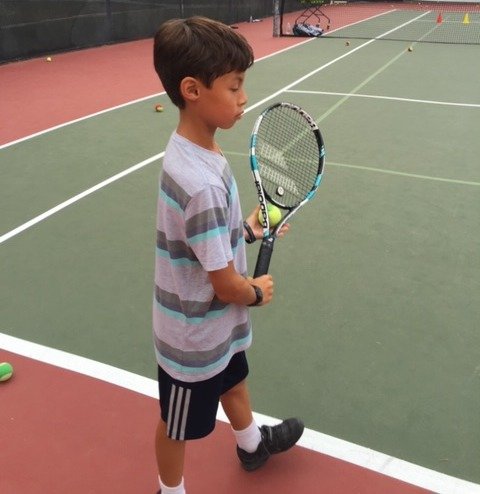
A four-part reset
1. Breathe and release
As the point ends, make a small physical change: turn away from the court, place the racket in the non-dominant hand, adjust the strings, or walk toward position. Take one intentional breath and let the previous point be complete.
2. Reset without judgment
If a correction is useful, keep it objective and brief. Replace “I always miss that” with one actionable cue such as “more space” or “higher over the net.” The reset is not the place for a technical argument with yourself.
3. Decide the pattern
Choose a target or first-ball pattern before approaching the line. Decide where to serve, where to return, or which space you want to protect. One clear intention is more useful than several competing instructions.
4. Commit and execute
Begin the physical ritual that tells the body it is time to play: settle the feet, bounce the ball, look at the target, or load into the return position. Once the choice is made, move attention outward to the opponent, ball, and court.
Make the routine repeatable
A routine works because it is familiar. Use the same basic sequence after a clean winner, an unforced error, and a long rally. Consistency gives the player a known route back to the present when the score creates pressure.
Practice the routine during sets rather than waiting for competition. Make completing the four steps a goal of the session. If frustration is still present when you reach the line, step away, breathe, and begin again.
Keep the intention simple
The best plan is one the player can remember while competing. A target, height over the net, or first-ball pattern is enough. The routine should reduce noise, not add another layer of analysis.
See how the reset connects with movement and decision-making in the Gleason Tennis coaching philosophy.
Train this on court
Want help building the routine?
A between-point routine is easier to build when someone is watching the whole point, not just the stroke. Jimmy coaches players from beginner through competitive levels through private and small-group instruction, based in Laguna Hills and coaching across Orange County communities.
Keep training
Common questions
Does mental toughness mean not reacting at all?
No. The goal is not to become emotionless. It is to notice the reaction, extract any useful information, and return attention to a task that helps the next point.
What should I do the moment a point ends?
Make a small physical change: turn away from the court, place the racket in the non-dominant hand, adjust the strings, or walk toward position. Take one intentional breath and let the previous point be complete.
How do I stop replaying an error?
If a correction is useful, keep it objective and brief. Replace “I always miss that” with one actionable cue such as “more space” or “higher over the net.” The reset is not the place for a technical argument with yourself.
How many things should I plan before the next point?
One clear intention is more useful than several competing instructions. A target, height over the net, or first-ball pattern is enough.
When should I practice the routine?
Practice the routine during sets rather than waiting for competition. Make completing the four steps a goal of the session.